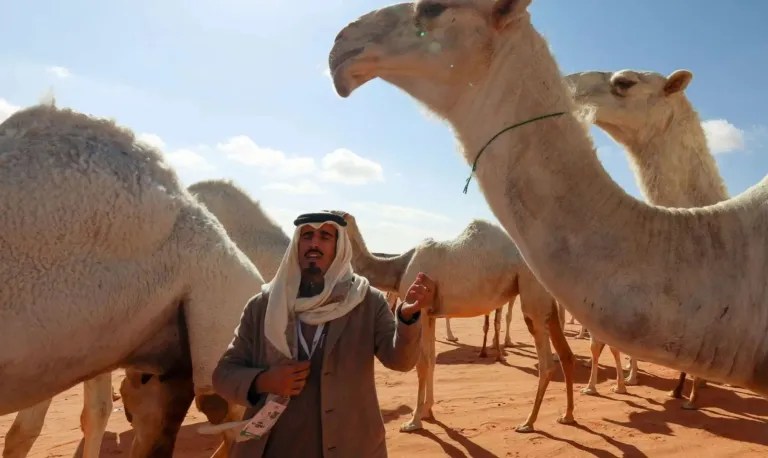
The Saudi Ministry of Environment, Water and Agriculture has announced plans to introduce official passports for camels as part of efforts to better regulate and manage one of the kingdom’s most culturally and economically valuable assets.
The initiative is designed to strengthen oversight of camel ownership, improve productivity and efficiency within the sector, and establish a centralised, reliable database for tracking animals across the country.
Saudi Arabia is home to an estimated 2.2 million camels, according to official figures released in 2024. For centuries, camels have played a vital role in Saudi society, serving as a key means of transportation and standing as symbols of heritage, prestige, and wealth.
In recent years, the camel industry has expanded rapidly, driven by breeding, racing, and beauty competitions. Prize-winning camels now sell for hundreds of thousands of dollars at major events such as the annual King Abdulaziz Camel Festival, significantly increasing the commercial value of the animals.
This growing economic importance has pushed authorities to tighten regulation, especially following repeated controversies involving cosmetic enhancements used to improve camels’ appearance in beauty contests. Practices such as injections and fillers to alter lips, noses, and humps have been banned, with violators facing fines and disqualification.
Officials say the new passport system forms part of a wider strategy to modernise agricultural governance in the kingdom, replacing informal, tradition-based record keeping with documentation, data, and traceability.
The ministry believes the initiative will help preserve Saudi Arabia’s traditional camel culture while supporting sustainable economic growth and improved management of the sector.