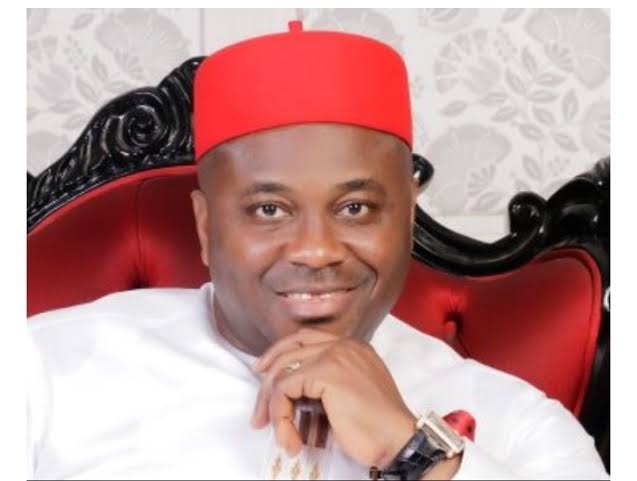
The Economic and Financial Crimes Commission (EFCC) has recorded a major legal triumph as the Supreme Court of Nigeria affirmed the conviction and seven-year prison sentence of Senator Albert Bassey in a N240 million fraud case.
In a unanimous ruling delivered on February 27, 2026, a five-member panel of the apex court upheld the earlier decisions of the trial court and the Court of Appeal, confirming Bassey’s conviction. The court also reinstated an order directing him to refund N204 million to the Akwa Ibom State Government.
Delivering the lead judgment, Justice Stephen Jonah Adah ruled that the conviction and sentence handed down on June 23, 2023, remain valid. He, however, faulted the Court of Appeal for setting aside the restitution order previously granted by the trial court.
According to the judgment, while the conviction and sentencing were properly affirmed by the appellate court, the decision to void the refund order was inconsistent with the law. The Supreme Court consequently nullified that aspect of the ruling and restored the directive requiring Bassey to repay N204 million.
The case originated from Bassey’s prosecution by the EFCC before Justice Agatha Okeke of the Federal High Court in Oyo, Akwa Ibom State. The anti-corruption agency, represented by Ekele Iheanacho, SAN, accused the former Akwa Ibom State Commissioner for Finance of receiving 12 luxury vehicles worth N254 million as bribes during his tenure in office.
On December 1, 2022, the trial court found him guilty on all seven counts and sentenced him to seven years imprisonment on each count, amounting to a total of 42 years. The sentences were ordered to run concurrently, effectively translating to a seven-year jail term.
Bassey subsequently challenged the judgment at the Court of Appeal. Although the appellate court upheld his conviction, it introduced an option of fine and set aside the restitution order. The EFCC contested that decision, prompting a further appeal to the Supreme Court.
With Friday’s ruling, the apex court has brought the prolonged legal dispute to a close, reinforcing the judiciary’s firm stance against corruption in public office and restoring the financial restitution initially ordered by the trial court.