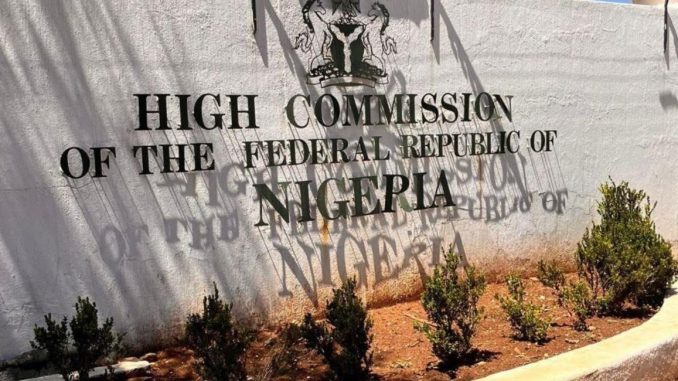
The city of Tshwane in South Africa disconnected electricity supply to the High Commission of the Federal Republic of Nigeria over unpaid utility bills, before later restoring power after the debt was settled.
The development was disclosed by the Executive Mayor of the City of Tshwane, Dr. Nasiphi Moya, in a post on X.
“#TshwaneYaTima: We’ve disconnected electricity at the High Commission of the Federal Republic of Nigeria. They owe the city for utility services,” Moya wrote.
The disconnection of power to Nigeria’s diplomatic mission sparked reactions online, with many South Africans and Nigerians questioning how a foreign high commission could accumulate utility debts in the host country.
Hours later, Moya issued an updated post confirming that the Nigerian High Commission had settled its outstanding obligations.
“We thank the High Commission of the Federal Republic of Nigeria for honouring its debt to the city. The city will reconnect electricity. @CityTshwane,” she wrote.
Neither the Nigerian High Commission nor the Nigerian Ministry of Foreign Affairs has issued an official statement on the incident as of the time of filing this report.
The episode adds to growing concerns about the management of Nigeria’s foreign missions, including issues of funding, maintenance of diplomatic facilities, and welfare of embassy staff across different countries.
SaharaReporters also reported a similar story in February 2024 on how the Abuja Electricity Distribution Plc (AEDC) gave the United Nations’ Abuja liaison office, the Head Economic Community of West African States (ECOWAS), Abuja, the Governor of the Central Bank of Nigeria (CBN), Ministry of Power, Ministry of the Federal Capital Territory, Ministry of Justice, Ministry of Finance and over 50 other ministries, departments and agencies 10-day disconnection ultimatum over N37.641 billion outstanding electricity charges debt.
During that time, the AEDC had threatened to disconnect the electricity supply of the Presidential Villa in Abuja, along with Ministries, Departments and Agencies (MDAs) over a total debt of N47.1 billion.
The electricity distribution company said that the Presidential Villa owes the sum of N923,873,150 as an outstanding debt for electricity charge
SaharaReporters had also reported that the power distribution company said that the Clerk to the National Assembly, Ojo Olatunde Amos, the Nigeria Police Force, the Economic and Financial Crimes Commission (EFCC) and the Department of State Services (DSS), also known as State Security Services (SSS), owe a total of N3,416,204,222 in electricity bill.
In a disconnection notice, the AEDC listed the outstanding electricity debts of government ministries, departments and agencies as of December 2023.
It gave the MDAs 10 days to comply and pay their debts or risk disconnection and subsequent blackout from February 28, 2024.
The company in the document stated that it was constrained to publish the details of the debts which had lasted for long for the services rendered.
The AEDC had stressed that the publication of the unpaid electricity bill became imperative because its “previous attempts to make them honour their obligations have not achieved the desired result”.
(gist core)