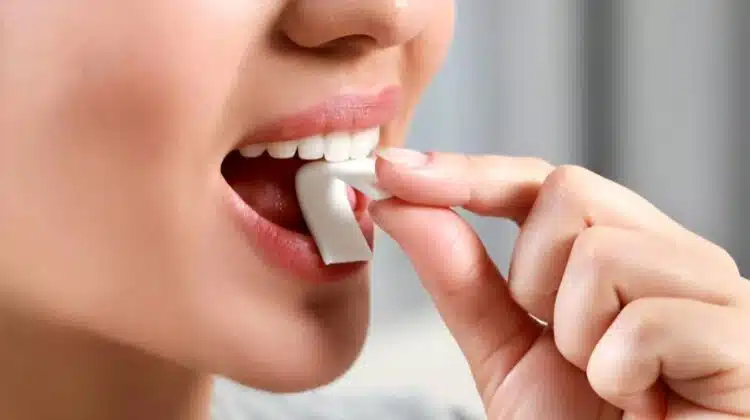
Chewing gum is frequently viewed as a casual habit or a quick fix for bad breath. However, decades of clinical research reveal that this everyday activity offers measurable physical and cognitive advantages. When choosing sugar-free varieties, the health benefits of chewing gum extend to tooth enamel restoration, acid reflux management, and improved mental performance.
Understanding the physiological mechanisms behind these benefits clarifies how a simple stick of sugar-free gum supports daily wellness.
1. Oral Health and Cavity Prevention
The primary and most widely documented health benefits of chewing gum relate to oral hygiene. Chewing stimulates the salivary glands, increasing saliva production from a resting rate of roughly 0.3–0.4min to up to 3.0\text-5.0\min—a nearly tenfold increase.
Neutralizing Plaque Acids and Remineralising Enamel
After eating, oral bacteria ferment carbohydrates, creating acids that drop mouth pH below the critical threshold of 5.5, at which point tooth enamel begins to demineralize. The boosted saliva flow triggered by chewing gum delivers a steady supply of bicarbonate ions, rapidly buffering mouth acidity back to a safe pH of 7.0 or higher within 20 minutes. Furthermore, saliva carries dissolved calcium and phosphate ions directly to the enamel surface, actively remineralizing early microscopic lesions before they turn into cavities.
The Specific Role of Xylitol
Not all sugar-free gums perform equally. Gums sweetened with xylitol—a naturally occurring sugar alcohol—offer targeted antimicrobial protection:
* Bacterial Starvation: Streptococcus mutans, the chief bacteria responsible for dental caries, consume xylitol assuming it is glucose. However, they cannot metabolize it, consuming cellular energy to expel the molecule until they starve.
* Reduction in Plaque Accumulation: Clinical trials indicate that consuming 3-8 text{ grams of xylitol daily through chewing gum can reduce oral bacterial counts by up to 70% and overall plaque formation by 20-50%.
| Oral Health Marker | Resting State | With Sugar-Free Chewing Gum |
| Salivary Flow Rate | 0.3\-0.4 mL/min} | 3.0–5.0 min |
| Plaque Acid Neutralization | Sluggish (45–60 mins) | Rapid 15-20mins |
| Oral S. mutans Count | Baseline 100% | Up to 70% reduction (with Xylitol)
2. Cognitive Enhancement and Focus
Beyond oral hygiene, neuroscientists have investigated the neurological health benefits of chewing gum. The mechanical action of mastication engages motor pathways that directly influence cerebral activity.
Increased Cerebral Blood Flow
Functional magnetic resonance imaging (fMRI) studies demonstrate that rhythmic jaw movement increases blood flow to the brain by 25–40. This surge delivers additional oxygen and glucose to key regions, including the prefrontal cortex (responsible for decision-making and executive function) and the hippocampus (responsible for memory consolidation).
Improved Memory and Attention Span
● Sustained Attention: Research published in the British Journal of Psychology showed that participants who chewed gum during a continuous 30minute auditory monitoring task maintained significantly faster reaction times and higher accuracy than non-chewers.
● Working Memory: Visual and verbal recall tests indicate performance improvements of 15–24% when subjects chew gum during initial information acquisition.
3. Stress Reduction and Mood Regulation
An unexpected area of research involves how the health benefits of chewing gum impact psychological stress and anxiety management.
Cortisol Suppression
In controlled laboratory stress evaluations (such as public speaking or complex multitasking trials), researchers measured salivary cortisol—the human body’s primary stress biomarker. Participants chewing gum exhibited up to a 16% decrease in salivary cortisol levels compared to control groups.
Physical Release of Tension
The rhythmic, repetitive motor activity of chewing serves as an unconscious outlet for nervous energy. By providing a low-effort motor task, chewing gum helps regulate central nervous system arousal, diminishing symptoms of acute anxiety and muscular tension without inducing drowsiness.
4. Gastrointestinal Management: Reducing Acid Reflux
For individuals suffering from Gastroesophageal Reflux Disease (GERD) or frequent heartburn, the health benefits of chewing gum provide a practical, non-pharmacological therapy.
Esophageal Clearance and Bicarbonate Delivery
Acid reflux occurs when stomach acid escapes upward into the esophagus. Chewing sugar-free gum for 30 minutes post-meal aids gastrointestinal comfort in two key ways:
● Increased Swallow Frequency: The extra saliva output forces more frequent swallowing—increasing from roughly once per minute to 3–4 times per minute. This physically pushes acid back down into the stomach.
● Esophageal Acid Neutralisation: Saliva contains a natural buffer of sodium bicarbonate. Frequent swallowing coats the esophageal lining with this alkaline fluid, neutralizing residual acid droplets that cause inflammation and painful heartburn.
Optimal Usage Guidelines
To maximise the medically proven health benefits of chewing gum while avoiding potential side effects:
● Select Sugar-Free Formulations: Always choose sugar-free gum, ideally listing xylitol as the primary sweetener. Sugar-sweetened gums feed harmful plaque bacteria, neutralizing all oral health benefits.
* Time Mastication Correctly: Limit sessions to 15–20 minutes after meals. Extended chewing beyond this timeframe offers diminishing returns and can strain the temporomandibular joint (TMJ) or cause facial muscle fatigue.
* Monitor Gastrointestinal Tolerance: Sugar alcohols like sorbitol or maltitol can cause mild laxative effects or bloating if consumed in excessive quantities (exceeding 20 {–}30 grams per day). Stick to 3–5 pieces of gum daily.
By integrating sugar-free gum into your post-meal routine, you leverage a clinically backed tool for oral preservation, cognitive performance, and digestive relief.
Source: Reportersatlarge