By: Odeh Favour Adiya
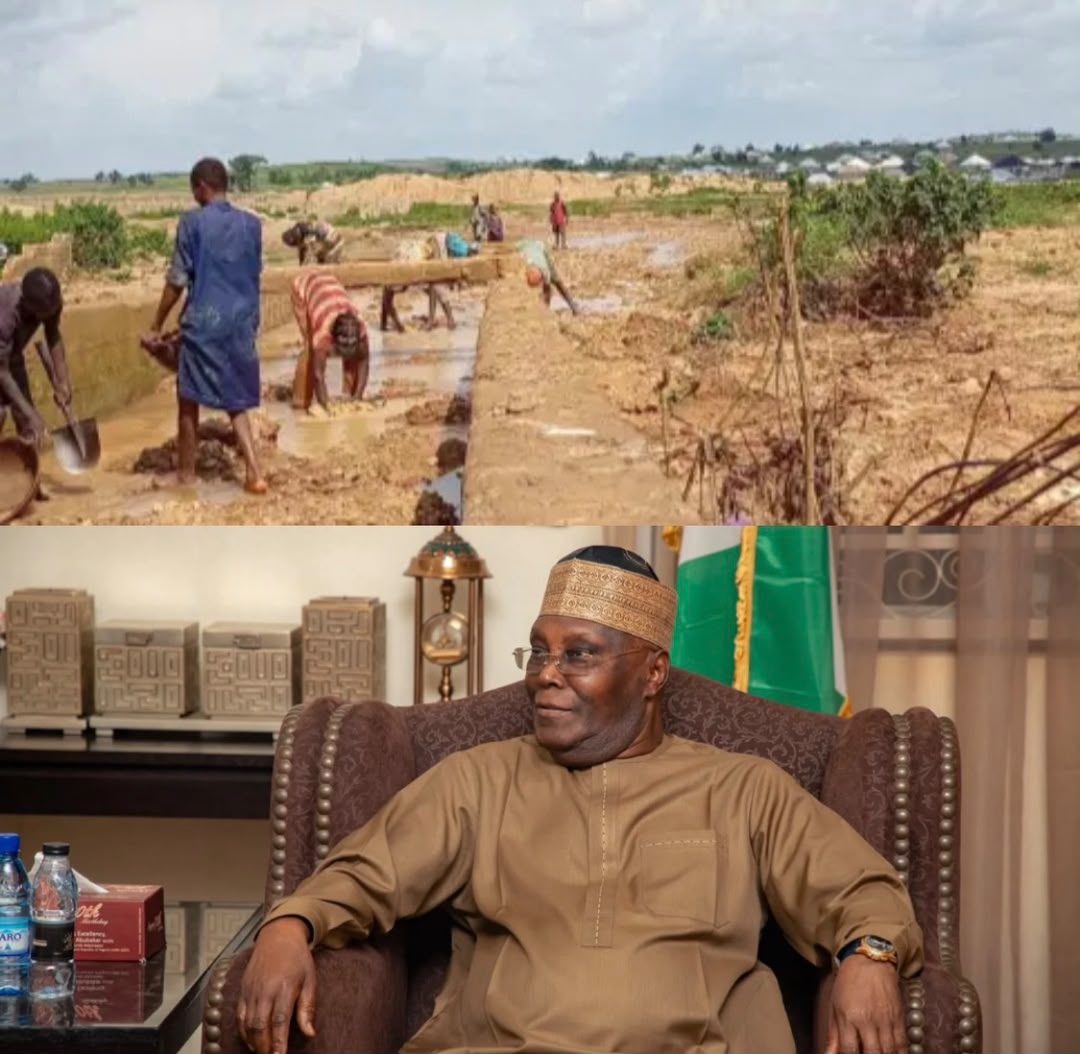
Former Vice President and African Democratic Congress presidential candidate, Atiku Abubakar, has donated ₦20m to the families of the 37 artisanal miners who died in the custody of the Nigeria Security and Civil Defence Corps in Minna, Niger State capital, recently.
Atiku made the donation on Tuesday during a visit to Minna, where he also paid a condolence visit to the Emir of Minna, Alhaji Umar Bahago.
The 37 detainees died on September 17, days after they were arrested during NSCDC operations against suspected illegal mining in the M.I. Wushishi and Lukoto areas of Niger State. The circumstances surrounding the deaths remain under investigation.
The deaths in Minna have generated public concern and prompted calls for accountability.
President Bola Tinubu ordered a full and transparent investigation, while the Interior Ministry said the federal investigative committee would determine responsibility, negligence or misconduct and recommend appropriate action where necessary.
The Federal Government has constituted a 10-member independent investigative committee to establish the immediate and remote causes of the deaths, while 20 NSCDC officers, including the Niger State Commandant, have been suspended pending the outcome of the investigation.
The Niger State Government has also inaugurated a nine-member judicial commission of inquiry to investigate the incident, including issues of responsibility and accountability.
Atiku’s visit comes as investigations into the deaths continue, with the cause of the fatalities yet to be conclusively established. Survivors have given accounts alleging overcrowding and poor conditions in the detention facility, while authorities have said investigations and medical examinations are required to determine what caused the deaths.
Speaking during his meeting with the affected families and survivors, Atiku described the deaths as a tragedy that demanded truth, justice and accountability. He said the account given by one of the survivors about the conditions in which the detainees were held was particularly disturbing.
A statement issued by the Senior Special Assistant on Public Communication to the former Vice President, Mr Phrank Shaibu, quoted Atiku as saying, “It was a gory tale listening to one of the survivors. He told us that more than 68 of them were crammed into one small detention facility and that conditions became so desperate that they had to drink one another’s urine just to stay hydrated.”
Atiku said those who died in custody were entitled to humane treatment and protection under the law, regardless of the allegations against them.
“No Nigerian should ever be subjected to such indignity in the custody of his own government. These were human beings in the care of the state. Whatever accusations may have been made against them, they were entitled to their lives, their dignity and the protection of the law,” he added.
He said the incident should also compel the government to examine the economic conditions forcing young Nigerians into hazardous and poorly regulated occupations.
“Thirty-seven young Nigerians entered the custody of the state alive and did not return alive to their families. That tragedy demands truth, justice and accountability,” he added.
The ADC chieftain linked the incident to the wider challenges of poverty, unemployment and the rising cost of living, arguing that economic policy should be measured by its impact on ordinary Nigerians.
“Economic reform must ultimately be measured by what it does to the lives of ordinary people. If life becomes progressively more difficult for families, workers and young people, then government has a responsibility to reconsider the choices producing those outcomes,” the statement quoted Atiku as saying.
He also restated his proposal for a targeted production subsidy for petroleum products refined in Nigeria, saying the policy would be aimed at supporting domestic refining while reducing petrol prices for consumers.
His proposal has drawn criticism from the All Progressives Congress, which has questioned its legal, fiscal and operational framework, including its compatibility with the Petroleum Industry Act and the safeguards that would prevent abuse.
Atiku, however, said his proposal was different from the previous open-ended subsidy regime on imported fuel.
“My promise to make life affordable again is not a political slogan. It is a solemn covenant with the Nigerian people,” he said.
“We will support what Nigeria produces. We will support fuel refined in Nigeria, create Nigerian jobs and insist that every naira of government support delivers a measurable benefit to the consumer,” he added.
He noted that government must create an environment where young Nigerians can pursue legitimate livelihoods rather than resorting to dangerous activities out of economic necessity.
“The purpose of government is not merely to announce reforms. The purpose of government is to make life better for the people,” he argued.