By: Odeh Favour Adiya
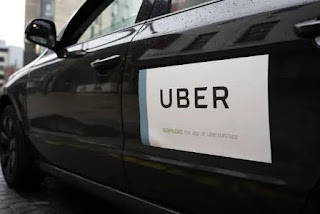
Ride-hailing giant Uber has officially launched its autonomous vehicle service in London in partnership with British artificial intelligence firm Wayve, coming barely 24 hours after shutting down its operations in Nigeria.
The tech firm, which operated in the Nigerian market for 12 years before pulling out, has made London its second European destination for self-driving rides, trailing an earlier deployment in Zagreb.
The initial phase of the UK rollout features fewer than 20 Wayve-powered, all-electric Ford Mustang Mach-E vehicles. Under this arrangement, passengers requesting standard Uber options like UberX, Uber Comfort, or Uber Electric may be matched with an autonomous car at no extra charge.
Welcoming the innovation, British Transport Secretary Heidi Alexander described the rollout as a transformative moment for urban transit.
“This is a major milestone for the future of transport in London, as British innovation brings this technology onto our roads and gives passengers more choice,” Alexander stated.
According to the developers, Wayve’s AI Driver software is engineered to learn dynamically from experience, adapting seamlessly to complex urban roads, changing weather conditions, and high-density traffic.
Chief Executive Officer and co-founder of Wayve, Alex Kendall, expressed optimism over selecting the British capital for the public deployment.
“We’re proud to introduce the Wayve AI Driver to the public for the first time right here in London, our home city and one of the most complex driving environments in the world,” Kendall said.
However, the company clarified that fully driverless operations will not start immediately due to strict regulatory compliance standards set by Transport for London and other safety authorities. Consequently, a licensed human operator will remain behind the wheel during initial rides to oversee the journey.
Uber’s Global Head of Autonomous Mobility, Sarfraz Maredia, noted that the supervised phase is critical to winning over passengers and regulators alike.
“This will build credibility with consumers as well as with the government,” Maredia remarked.
The strategic pivot to driverless technology follows a broader restructuring effort within Uber, which included a 10 percent reduction in its global workforce as the firm shifts investment heavily toward autonomous mobility across major global markets.