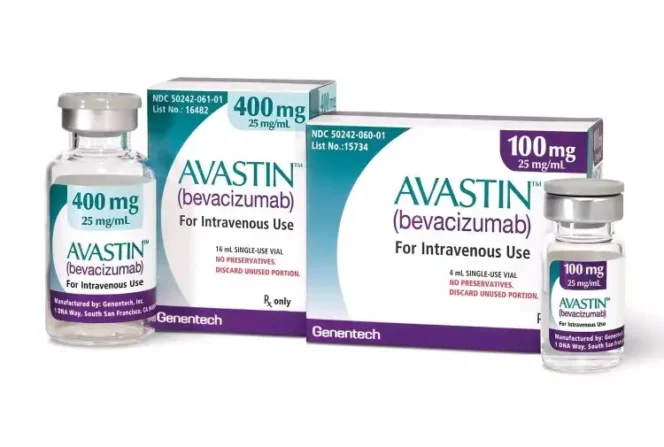
The National Agency for Food and Drug Administration and Control (NAFDAC) has warned Nigerians about counterfeit cancer medicines circulating in the country, including Avastin (bevacizumab) and Tecentriq (atezolizumab).
Avastin is commonly used in the treatment of recurrent glioblastoma in adults, while Tecentriq is prescribed for advanced cancers such as non-small cell lung cancer, extensive-stage small cell lung cancer, liver cancer, and melanoma.
In a public notice, the agency said it received reports of counterfeit batches following communication from Roche Nigeria.
According to the alert, some patients reportedly obtained the suspected fake drugs from health facilities at significantly lower prices, ranging between N180,000 and N350,000.
“The Marketing Authorization Holder reported receiving complaints from healthcare professionals across Nigeria,” the agency stated.
“On investigation, Roche Nigeria compared the complaint samples with genuine retained samples, providing clear evidence of counterfeit packaging materials.”
NAFDAC listed several discrepancies identified during the investigation, including batch numbers that do not match authentic Roche records, differences in artwork and printing quality, incorrect placement of text, and inconsistent variable data.
The agency also noted irregularities in tamper-evident labels and serial numbers, which did not align with Roche’s standard tracking system.
It identified specific counterfeit batches of Avastin 400mg/16ml with batch numbers H4239A70, H2290A34, and A3508B02, as well as Tecentriq 1200mg/20ml with batch number B3071A12.
However, NAFDAC stated that chemical analysis could not be conducted, as the investigation relied on packaging photographs provided by complainants and no physical samples were available.
The agency warned that counterfeit oncology drugs may contain incorrect or no active ingredients, harmful contaminants, or improper dosage levels, posing serious health risks including treatment failure, disease progression, severe adverse effects, or death.
NAFDAC has directed its zonal directors and state coordinators to intensify surveillance and ensure the removal of the counterfeit products from circulation.
It also urged healthcare providers, importers, and patients to procure medicines only from authorised suppliers and to report any suspected falsified drugs through official channels.