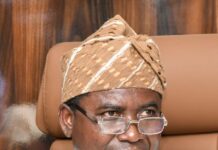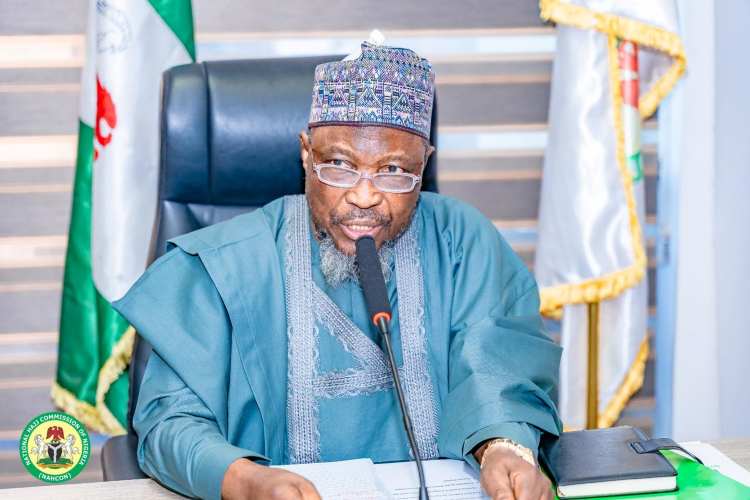
Prof. Abdullahi Usman has resigned as chairman of the National Hajj Commission of Nigeria (NAHCON), amid an ongoing investigation by the Economic and Financial Crimes Commission (EFCC) into alleged financial misconduct within the commission.
The resignation was confirmed on Monday night by Ahmed Muazu, Usman’s media assistant. No official reason was given for his decision to step down at the time of filing this report.
Usman, who was appointed by President Bola Ahmed Tinubu in 2024, oversaw the 2025 Hajj operations, his first at the national level. He succeeded Jalal Arabi, who was removed following investigations into alleged misappropriation of funds allocated for the 2024 pilgrimage.
Although his tenure was short, it was fraught with controversy, particularly allegations of financial mismanagement during the 2025 Hajj exercise. These claims triggered internal disputes within NAHCON and drew widespread public attention.
The EFCC has been probing the commission over allegations of large-scale financial misconduct, including the alleged diversion and misappropriation of more than ₦50 billion. Specific accusations include the unauthorized expenditure of ₦25 billion on Masha’ir tents, ₦7.9 billion on contingency housing, and ₦1.6 billion on travel expenses for officials’ spouses.
As part of the investigation, the anti-graft agency detained Usman and several other senior officials of the commission, including the Commissioner for Policy, Personnel and Finance, Aliu Abdulrazak, and the Director of Finance and Accounts, Aminu Y. Muhammed. Usman was later released on administrative bail.
During a previous appearance before the House of Representatives at a public hearing, Usman acknowledged the existence of what he described as “dirty deals” within the commission and pledged his support for transparency and accountability.
In January 2026, tensions within NAHCON escalated when some commissioners reportedly submitted a petition to President Tinubu, passing a vote of no confidence in Usman. The petition accused him of leadership failures and poor administrative conduct.
The crisis prompted intervention from Vice President Kashim Shettima, who convened a meeting with key stakeholders about two weeks ago in an attempt to resolve internal disagreements and restore stability within the commission.