The planned arraignment of former Kaduna State Governor, Nasir El-Rufai, over the alleged unlawful interception of the phone communications of the National Security Adviser (NSA), Nuhu Ribadu, was stalled on Tuesday after the Department of State Services (DSS) failed to produce him in court.
Proceedings at the Federal High Court in Abuja could not go on as scheduled when the case was called before Justice Joyce Abdulmalik. The court was informed that El-Rufai remained in the custody of the Independent Corrupt Practices and Other Related Offences Commission (ICPC).
El-Rufai was initially detained by the Economic and Financial Crimes Commission (EFCC) over alleged money laundering before being transferred to the ICPC. Although the court had authorised the DSS to arraign him on a three-count charge bordering on threats to national security, he was not produced for trial.
Following the development, Justice Abdulmalik adjourned the matter to April 23.
The former governor, who served from 2015 to 2023 and previously held office as Minister of the Federal Capital Territory under former President Olusegun Obasanjo, was expected to take his plea.
The DSS, through a team of five prosecutors led by M. E. Ernest, alleged that El-Rufai, alongside others said to be at large, unlawfully intercepted the NSA’s telephone communications.
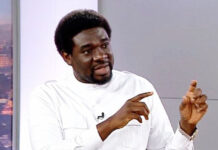
According to the charge, on February 13, 2026, while appearing on Arise TV’s Prime Time Programme in Abuja, El-Rufai “aligned with others and unlawfully intercepted the phone communications of the NSA,” contrary to Section 12(1) of the Cybercrimes (Prohibition, Prevention, etc.) (Amendment) Act, 2024.
The DSS further alleged that during the interview, he related to an individual who had unlawfully intercepted the NSA’s calls without reporting the matter to security agencies, contrary to Section 27(b) of the same Act.
He was also accused of using technical equipment, in collaboration with others, in a manner that compromised public safety and national security, in violation of Section 131(2) of the Nigerian Communications Act, 2003.
El-Rufai has denied the allegations. He previously described an alleged attempt by DSS operatives to “abduct” him at the Nnamdi Azikiwe International Airport on February 12, 2026, upon his return from Cairo. He claimed that the ICPC acted on a directive from Ribadu based on information from an individual who allegedly listened in on the NSA’s phone conversations.
In a motion seeking to quash the charge marked FHC/ABJ/CR/99/2026, El-Rufai advanced 17 grounds, arguing that the DSS lacked the legal authority to treat remarks he made during a television interview as a confession.
He maintained that his comments on Arise TV did not amount to a confessional statement in law, stressing that for a statement to qualify as a confession, it must be made under caution, voluntarily, and in compliance with the Judges’ Rules.
“A casual remark in a television programme cannot be elevated to a judicial confession,” he argued.