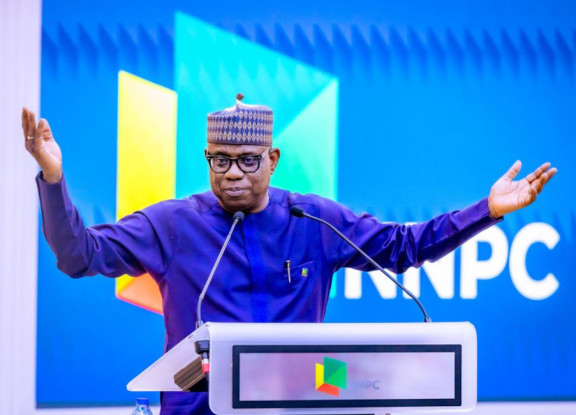
Eight months into his tenure as Group Chief Executive Officer of NNPC Limited, Bayo Ojulari is emerging as a steady hand guiding one of Nigeria’s most consequential but understated energy shifts: the elevation of natural gas from a supporting role to a central pillar of national economic strategy. In a sector long defined by crude oil output and export revenues, Ojulari’s leadership is reinforcing a deliberate transition toward gas-led diversification.
This transition did not begin with Ojulari. Nigeria’s gas ambitions have been embedded in policy frameworks and infrastructure planning for more than a decade. What has changed under his watch is execution. By stabilising delivery, aligning projects with the Petroleum Industry Act (PIA) and prioritising commercial outcomes over political symbolism, Ojulari has helped convert long-standing plans into tangible progress.
Nigeria’s more than 206 trillion cubic feet of proven gas reserves provide a compelling foundation for this pivot. Under Ojulari, NNPC Ltd has treated gas not as a future promise but as a practical hedge against oil price volatility, a catalyst for industrial growth and a tool for strengthening energy security. Gas, with its longer-term contracts and domestic utilisation potential, offers insulation from the fiscal shocks that have historically accompanied swings in global oil markets.
This thinking is evident in NNPC’s continued commitment to the Ajaokuta–Kaduna–Kano (AKK) Gas Pipeline. In 2025, the project reached a critical milestone with the successful crossing of the River Niger, one of its most technically complex phases. While the AKK pipeline predates Ojulari’s tenure, his administration has focused on contract optimisation, stakeholder coordination and realistic delivery targets. Once completed, the pipeline is expected to support power generation, fertiliser production and petrochemical industries across northern Nigeria.
Beyond AKK, progress on the Obiafu–Obrikom–Oben (OB3) pipeline has strengthened the emerging national gas grid, linking eastern supply sources to western demand centres. Together, these projects form the backbone of a domestic gas network designed to reduce flaring, improve supply reliability and unlock new commercial opportunities.
Regionally, the Nigeria–Morocco Gas Pipeline remains the most ambitious element of Nigeria’s gas strategy. Though challenged by financing and coordination across multiple countries, Ojulari has sustained technical and diplomatic engagement to keep the project credible, positioning Nigeria as a potential continental gas hub.
Crucially, Ojulari’s gas push aligns with Nigeria’s pragmatic energy transition agenda. By promoting gas as a transition fuel—cleaner than oil and locally abundant—NNPC is linking emissions reduction with affordability and competitiveness, including through compressed natural gas initiatives in transport.
Rather than grandstanding, Ojulari has emphasised commercial discipline, continuity and execution. In an industry where leadership changes often derail progress, that steadiness may ultimately define his most enduring contribution to Nigeria’s energy future.