By Our Correspondent
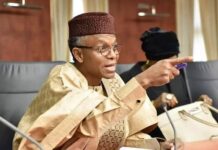
Chairman of the Senate Public Accounts Committee, Senator Aliyu Wadada, struggled to convincingly defend the controversial claim that about ₦210 trillion is missing from the accounts of the Nigerian National Petroleum Company Limited (NNPCL) during a live appearance on Sunday Politics, a Channels Television programme hosted by Seun Okinbaloye.
During the interview, the lawmaker insisted that the Senate committee relied on figures extracted from the national oil company’s audited financial statements covering the period between 2017 and 2023.
However, the host repeatedly pressed the senator on the credibility of the figure and whether it aligned with Nigeria’s fiscal realities.
At one point, Okinbaloye asked how a discrepancy of ₦210 trillion could exist when Nigeria’s entire federal budgets within the same period were only a fraction of that amount. He also questioned whether the figure could have arisen from cumulative accounting entries rather than actual missing funds.
Wadada struggled to provide a direct explanation, repeatedly stating that the numbers were derived from the company’s financial statements and that the committee was simply seeking clarification from the national oil company.
In another exchange, the presenter pressed the senator on whether the committee had established that the funds were truly “missing” or whether the figures represented accounting classifications such as receivables, liabilities or multi-year financial entries.
Okinbaloye also asked whether presenting such figures publicly without a complete forensic breakdown could create the misleading impression that trillions of naira had been diverted.
The senator again offered a cautious response, saying the committee was still reviewing the records and had invited NNPCL officials to explain the entries contained in the audited accounts.
Despite the senator’s defence, analysts say the explanation failed to address fundamental questions surrounding the scale and plausibility of the figure being cited.
Oil and gas industry professional Dr. Kenneth Imeobi described the allegation as economically unrealistic, arguing that the figure collapses under basic scrutiny of Nigeria’s fiscal structure and oil sector revenue flows.
According to him, the scale of the alleged discrepancy far exceeds the country’s fiscal capacity during the period in question.
“Between 2017 and 2020, Nigeria’s entire federal budget ranged between roughly ₦7 trillion and ₦10 trillion annually, only rising significantly in recent years,” he said.
“To suggest that a single government company misplaced ₦210 trillion implies financial flows that are several multiples of Nigeria’s total national budget across many years.”
Imeobi added that such a scenario would require the national oil company to generate and lose sums exceeding the fiscal capacity of the Nigerian state itself.
He also dismissed suggestions that NNPC Upstream Investment Management Services (NUIMS) could independently disburse funds on such a scale.
“These operations are governed by joint venture partner approvals, corporate governance processes, annual work programme authorisations and regulatory oversight. There is simply no operational pathway through which funds on the scale being alleged could be disbursed outside those controls,” he said.
Chartered accountant and financial analyst Ezikiel Akande said the controversy appears to stem from a misunderstanding of how financial reporting works in the oil and gas sector.
According to him, financial statements in the industry often contain large cumulative entries reflecting capital expenditure programmes, joint venture cash calls, legacy liabilities and reconciliation of long-term commitments.
“When such figures are aggregated across several fiscal cycles, they can appear enormous if not properly interpreted,” he said.
Akande warned that presenting aggregated accounting figures as unexplained or missing funds without detailed forensic analysis risks creating a false narrative.
“Taking cumulative financial entries and presenting them as newly discovered missing funds is not sound financial analysis. It simply reflects a misreading of complex financial statements,” he said.
Analysts say the episode underscores the risks of drawing sweeping conclusions from complex financial records without a thorough technical review. They warn that exaggerated figures circulating in the public space could distort public perception and undermine investor confidence in Nigeria’s oil sector.