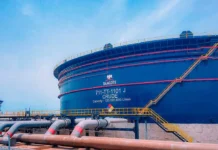
The Dangote Petroleum Refinery and Petrochemicals has tightened access to its Premium Motor Spirit (PMS), restricting supplies to major petroleum marketers that continue to import petrol into Nigeria.
The move, which took effect late last week, is reportedly driven by concerns over product quality, traceability and the possibility of imported petrol being mixed with products supplied by the refinery.
Sources familiar with the refinery’s position said some marketers were allegedly blending imported PMS with petrol purchased from the Dangote facility before distributing the mixture to consumers.
The refinery is said to be concerned that such practices could make it difficult to determine the origin and quality of petrol sold to motorists, while potentially creating the impression that the resulting product was entirely supplied by Dangote.
A source familiar with the matter said the refinery was concerned that its investment in producing petroleum products to specified standards could be undermined if its products were mixed with imported fuel of uncertain quality.
Another issue reportedly raised by the refinery is the adequacy of Nigeria’s existing laboratory and quality-control infrastructure to independently test and certify imported PMS entering the domestic market.
The development comes as Nigeria’s downstream petroleum industry undergoes a major shift from years of dependence on imported refined products towards increased domestic production.
The Dangote refinery, with a stated capacity of 700,000 barrels per day, has become a major source of refined petroleum products for Nigeria and international markets.
The facility maintains that its products comply with internationally recognised quality standards.
The growing output from the refinery has also contributed to a significant increase in Nigeria’s exports of refined petroleum products.
The United States Energy Information Administration recently identified the Dangote refinery as a major driver of the increase in Nigeria’s seaborne petroleum product exports.
According to the EIA, Nigeria’s seaborne petroleum product shipments averaged 561,000 barrels per day during the second quarter of 2026, a sharp rise from the annual average of 79,000 barrels per day recorded in 2023.
Dangote’s expansion into international markets has also extended to aviation fuel. Its jet fuel has reportedly gained buyers in Europe and the United States, with the refinery emerging as a significant supplier to the European market in recent months.
The restriction on PMS supplies underscores the intensifying competition between locally refined petroleum products and imported fuel as Nigeria’s downstream sector adjusts to the growing availability of domestically produced petrol.
It also highlights ongoing concerns over product quality, blending practices and the need for stronger independent testing mechanisms as domestic refining capacity expands.