By: Odeh Favour Adiya
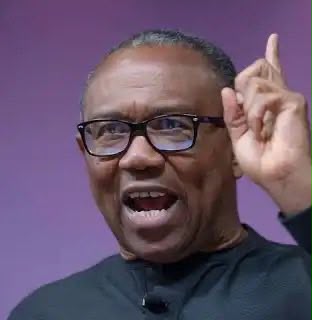
The presidential candidate of the NDC, Mr Peter Obi, has criticised the Federal Government over what he described as years of poor management of Nigeria’s education sector, following recent comments by the Minister of Education admitting that the policy separating junior and senior secondary schools had failed to improve learning outcomes.
In a statement shared on his X account, Obi argued that the minister’s remarks amounted to an acknowledgment that government policies had not addressed the country’s worsening education challenges.
According to him, the declining performance of students in national examinations reflects a deeper leadership failure rather than shortcomings in the structure of the education system.
Obi cited recent West African Senior School Certificate Examination (WASSCE) results as evidence of the sector’s decline, claiming that only 38.32 per cent of candidates passed both English Language and Mathematics in 2024, while the pass rate dropped to 32 per cent in the computer-based WASSCE conducted in 2025.
He described the trend as alarming, warning that poor educational outcomes pose a serious threat to Nigeria’s long-term economic growth and human capital development.
The former Anambra State governor maintained that meaningful national development depends on sustained investment in education, healthcare and job creation, arguing that countries with strong economies have consistently prioritised these sectors.
Obi also criticised the Federal Government’s budgetary allocation to education, noting that the sector received ₦3.52 trillion in the 2026 budget, representing 6.17 per cent of total expenditure. He argued that the figure falls short of UNESCO’s recommended benchmark of 15 to 20 per cent and is lower than the 7.87 per cent allocated in the previous year’s budget.
He further expressed disappointment over reports that Nigeria was unable to sponsor students to international STEM and Mathematics Olympiads due to funding constraints, describing the development as evidence of misplaced national priorities.
According to Obi, the government’s attempt to attribute the education crisis to the separation of junior and senior secondary schools misses the real problem, which he said is inadequate funding, poor implementation of policies and a lack of commitment to improving educational standards.
Reflecting on his tenure as governor of Anambra State, Obi said deliberate investments in education, including the provision of laptops, internet connectivity, power supply and other learning resources, contributed to significant improvements in the state’s education sector.
He added that the initiative earned recognition from HP Africa, which reportedly acknowledged Anambra as the subnational government that had distributed the highest number of laptops to schoolchildren on the continent.
Obi concluded by urging the government to prioritise investment in education, healthcare and employment, warning that neglecting the country’s young population could have lasting consequences for Nigeria’s future.