The Nigerian National Petroleum Company (NNPC) Limited has said no date has been fixed for the proposed initial public offering (IPO) of its shares, stressing that the final decision rests with the company’s shareholders.
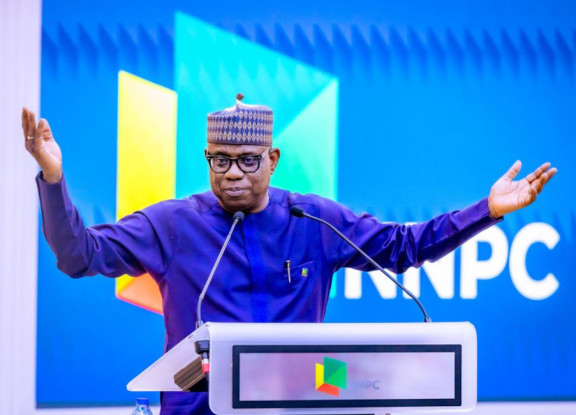
Group Chief Executive Officer of NNPC Limited, Bashir Ojulari, disclosed this on Tuesday during a media parley in Abuja, saying the company was currently focused on ensuring it was ready for the proposed listing.
Ojulari said consultants and other relevant parties were assessing the company’s preparedness and the outstanding actions required before a decision could be made on the timing of the IPO.
“We don’t have a date for the IPO at this time. When we do, we’ll communicate that. But just also bear in mind that we cannot just determine a date for IPO on our own. It is the consultants and the parties that assess and evaluate that will give us a sense of readiness overall when they finish,” he said.
“They will look at the closure of all those actions, and based on that, they will be able to advise when the team will be ready. Remember what I said, we can only focus on readiness. The decision to take IPO is not ours. It’s the shareholders that will take ultimately that decision on behalf of the country. Ours is to be ready. That subtle difference is very important.”
On the company’s financial performance, Ojulari attributed the improvement in profitability to increased operational efficiency and tighter fiscal discipline across its business units.
He said crude oil and condensate production reached a five-year high of 1.77 million barrels per day, while domestic gas supply rose to a three-year peak of 7.2 billion standard cubic feet per day.
According to him, investments in asset integrity, infrastructure and project execution contributed to the improved performance and provided a stronger financial base for future expansion.
“Profit after tax rose 33%, from N5.4 trillion in 2024 to N7.2 trillion in 2025. Revenue was N34.5 trillion naira. We also recorded earnings per share of N35.9 naira. While taxes, royalties, and other remittances to government rose 39 performance to N22.3 trillion,” he said.
Ojulari explained that revenue declined amid lower crude oil prices and a reduction in white-product volumes following changes in the market.
He, however, said improved operational efficiency helped drive the growth in profit.
“Profit grew because we improved the way we operate,” he said.
He added that the stronger financial performance would increase NNPC’s capacity to invest, contribute to public revenue and support Nigeria’s energy security.
“So our 2025 performance shows what discipline, execution, and a capable workforce can deliver. We are strengthening earnings, growing production, and investing in people and assets that will sustain value for our shareholders, communities, and the Nigerian people.”
Ojulari also said NNPC was working to expand the connection between available gas resources and the market, with the aim of using gas to support industrialisation, power generation and broader economic growth.
On the state-owned refineries, he said NNPC had made significant progress through its technical equity partnership model.
He disclosed that the company had conducted a three-month intrusive on-site due diligence exercise involving more than 34 senior engineers and was working towards completing its report.
“We have carried out a three-month intrusive onsite due diligence with over 34 of our top engineers, and we are now looking at concluding that report. And the objective remains the same. What we want going forward is to have refinery that is self-sustaining, that is profitable, and is sustainable,” Ojulari said.
“We believe that a not-too-distant future will be able to define that pathway forward. We learned a lot through those onsite visits, and I think we are more confident that we’ll have a pathway very soon in terms of how to bring the refinery back to sustainable and profitable operation.”
The NNPC boss also outlined the company’s production targets, saying it was aiming to increase crude oil output to two million barrels per day by 2027 and three million barrels per day by 2030.
For natural gas, the company is targeting production of 10 billion cubic feet per day by 2027 and 12 billion cubic feet per day by 2030.
Ojulari said the targets would be supported by the mobilisation of more than $60 billion in investment across Nigeria’s energy value chain.
“Crude oil production of 2 million barrels by 2027 and 3 million barrels by 2030. Natural gas production 10 BCF by 2027 and 12 BCF by 2030. And underpinned by mobilization of over $60 billion of investment across the energy value chain. These numbers are quite staggering, and they are challenging. We’re not afraid,” he said.
“We believe with the right ambition, we can mobilize the right focus, the right energy towards attaining those ambitions. If you put your ambitions low, that means your own resources will be low. Nigeria deserves more.”