The Independent Corrupt Practices and Other Related Offences Commission (ICPC) has recommended the prosecution of Adeniyi Adeyemi, promoter of the controversial Presidential Foreign Investment Promotion Council (PFIPC), after concluding that neither he nor the organisation had any legal recognition from the Federal Government.
The Commission also disclosed that its investigation uncovered two additional fictitious government agencies allegedly created by the suspect, alongside procedural weaknesses in several Ministries, Departments and Agencies (MDAs) that enabled the scheme to operate.
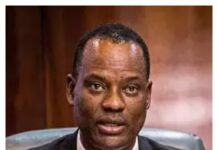
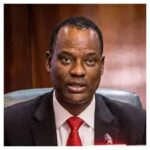
ICPC Chairman, Dr. Musa Adamu Aliyu, disclosed the findings on Thursday after presenting an interim report to President Bola Tinubu at the Presidential Villa in Abuja before briefing journalists.
Aliyu said the report was submitted 30 days after President Tinubu directed the anti-corruption agency to investigate the activities of the purported government agency.
According to him, investigations confirmed that Adeyemi was never appointed by the Federal Government or any authorised institution and that the Presidential Foreign Investment Promotion Council, also known as the Presidential Foreign Intervention Promotion Council, was never created through any law, executive order or other legally recognised government instrument.
“The appointment letter presented by Adeniyi Adeyemi Matthew was completely forged, alongside similar documents used to perpetrate the illegal activities of the fake agency,” Aliyu said.
He added that the government gazette relied upon by the suspect to legitimise the organisation was equally forged and did not pass through the official processes required for government publications.
The ICPC chairman further alleged that Adeyemi unlawfully assumed the identity of the defunct Presidential Economic Advisory Council (PEAC), claiming he broke into the council’s office and converted it into the operational headquarters of the fictitious organisation.
According to him, investigators uncovered widespread cases of impersonation, false representation and other unlawful activities carried out in the name of the fake agency.
Aliyu also disclosed that investigators discovered two other fictitious agencies allegedly established by the suspect: the Foreign Capital and Wealth Investment Promotion Agency (FCWIPA) and the Foreign Investment Promotion Agency/Public-Private Partnership (FIPA-PPP).
He alleged that forged legislative documents presented as enabling Acts were used to create the organisations and facilitate the opening of commercial bank accounts through which they operated.
The ICPC also identified administrative and procedural weaknesses across several government institutions that allegedly created opportunities for the fraud to flourish.
However, the Commission stressed that its findings did not indicate official involvement by the affected agencies but rather exposed internal control deficiencies requiring urgent reforms.
Among the institutions where lapses were identified are the Office of the Secretary to the Government of the Federation (OSGF), the Office of the Head of the Civil Service of the Federation (HoSF), the Office of the Accountant-General of the Federation (OAGF), the Budget Office of the Federation and the National Information Technology Development Agency (NITDA).
Aliyu said those institutional gaps enabled the suspect to operate the fictitious organisation before the alleged fraud was uncovered.
Asked about allegations involving approximately ₦400 million reportedly connected to the investigation, the ICPC chairman declined to comment.
“I don’t want to go into that allegation because it is part of the criminal investigation. Once we conclude our work and the matter goes to court, Nigerians will see what our investigation uncovered,” he said.
He added that the Commission would recommend reforms aimed at strengthening internal controls, improving verification procedures and enhancing coordination among government agencies to prevent similar occurrences.
Meanwhile, the House of Representatives Ad-hoc Committee investigating the alleged PFIPC questioned the Federal Road Safety Corps (FRSC) over its decision to issue official Federal Government number plates to the organisation.
During his appearance before the committee, Corps Marshal Shehu Mohammed confirmed that the FRSC relied on documents submitted by the organisation, including one listing President Bola Tinubu and other senior government officials as members of its governing board.
Committee Chairman Yusuf Gagdi expressed concern that such claims should have prompted stricter verification before the agency approved the request.
Also on Thursday, the State House denied issuing any correspondence to the Office of the Accountant-General of the Federation requesting the creation of a budget code for the PFIPC.
Appearing before the same House committee, the Director of Administration at the State House, AbdulKadir Idris, who represented Permanent Secretary Temitope Peter Fashedemi, described documents linking the Presidency to the organisation as forged.
He maintained that neither the Permanent Secretary nor any official of the State House requested the Accountant-General to create a budget code for the alleged agency, adding that the Presidency only became aware of the PFIPC after reports emerged in the media and the Nigeria Police Force National Cybercrime Centre invited the institution to assist in the investigation.