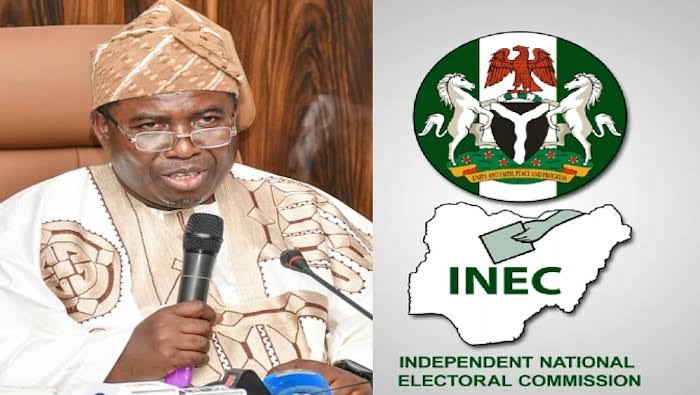
The Independent National Electoral Commission (INEC) has cautioned political parties that any primary election conducted after its May 30, 2026 deadline remains invalid unless a higher court overturns an earlier Federal High Court ruling that affected the commission’s election timetable.
INEC National Commissioner and Chairman of the Information and Voter Education Committee, Mohammed Kudu Haruna, said political parties should continue to comply with the provisions of the Electoral Act 2026 while the commission’s appeal against the court judgment is pending before the Court of Appeal.
According to Haruna, the legal challenge does not automatically invalidate INEC’s directive, stressing that parties are expected to operate within the framework of the existing electoral law until a final judicial pronouncement is made.
He warned that any primary election conducted outside the commission’s approved window could face legal complications if the Court of Appeal ultimately upholds INEC’s position.
The controversy stems from a judgment delivered by Justice Mohammed Umar of the Federal High Court in Abuja, who nullified portions of INEC’s electoral timetable and guidelines in a suit filed by the Youth Party.
In the case marked FHC/ABJ/CS/517/2026, the court ruled that INEC lacked the authority to reduce or alter timelines specifically provided under Section 29(1) of the Electoral Act 2026 for the submission of party membership registers and candidates’ particulars.
Justice Umar held that the commission acted beyond the powers granted to it by law, thereby rendering aspects of the timetable invalid.
Dissatisfied with the ruling, INEC immediately filed a notice of appeal and sought a stay of execution, arguing that its timetable was issued in accordance with its constitutional and statutory responsibilities.
The legal dispute took another turn less than 24 hours later when a separate Federal High Court in Abuja delivered a different interpretation of INEC’s powers.
In a suit filed by the Social Democratic Party (SDP), Justice James Omotosho upheld the commission’s constitutional authority to formulate and adjust election timetables. However, he emphasised that such powers must be exercised within the limits prescribed by the Electoral Act.
Before the court rulings, INEC had designated April 23 to May 30, 2026, as the official period for political parties to conduct their primary elections ahead of the general polls.
The commission’s latest warning comes amid growing concerns over compliance with the electoral timetable, particularly as some parties continue to grapple with disputes arising from their primary elections.
Meanwhile, the African Democratic Congress (ADC) has ordered rerun primary elections in several federal and state constituencies in Kaduna State after its appeals committee reviewed and upheld petitions challenging the initial exercises.
With INEC’s appeal still before the Court of Appeal, the validity of primaries conducted outside the commission’s original deadline remains uncertain, leaving affected political parties in a precarious legal position ahead of the next phase of the electoral process.