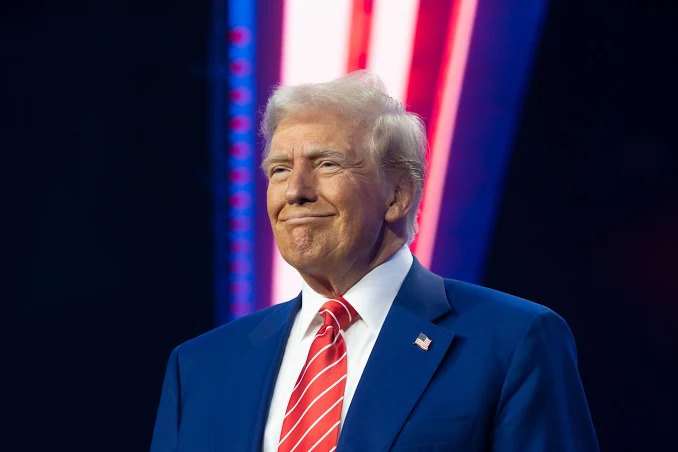
The U.S. Supreme Court has rejected President Donald Trump’s attempt to restrict birthright citizenship, delivering a significant legal setback to one of his administration’s signature immigration policies.
In a 6–3 ruling on Tuesday, the court upheld a lower court’s decision blocking Trump’s executive order, which sought to deny automatic U.S. citizenship to children born in the country if neither parent is a U.S. citizen or lawful permanent resident.
The justices ruled that the executive order violates the Citizenship Clause of the 14th Amendment to the U.S. Constitution, which guarantees citizenship to anyone born in the United States and subject to its jurisdiction.
Writing for the majority, Chief Justice John Roberts relied on the landmark 1898 Supreme Court decision in United States v. Wong Kim Ark, which established that children born on American soil are entitled to U.S. citizenship regardless of their parents’ nationality, except in limited circumstances.
“For the 128 years since, we have repeatedly understood the rule of Wong Kim Ark to guarantee citizenship to all children born in the United States and subject to its power,” Roberts wrote. “We see no reason to depart from that view today.”
He also stated that there was “scant evidence” to support the administration’s interpretation of the 14th Amendment.
Trump signed the executive order on his first day back in office as part of a broader effort to tighten immigration policies, targeting both legal and undocumented immigration. The directive was immediately challenged in court by immigrant families, civil rights organisations and advocacy groups, who argued that it was unconstitutional and contradicted more than a century of legal precedent.
The decision marks another major judicial setback for the Trump administration, following the Supreme Court’s February ruling that invalidated its sweeping global tariff policy.