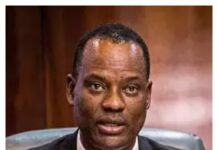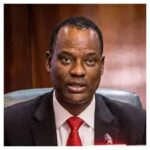
Arise Television broadcaster Rufai Oseni has raised concerns that recent developments within Nigeria’s political and judicial landscape could pave the way for attempts to prevent major opposition figures from participating in the 2027 general elections.
Oseni made the remarks while reacting to a Federal High Court judgment ordering the deregistration of several political parties, including the African Democratic Congress (ADC), Accord Party (AP), Action Peoples Party (APP), Zenith Labour Party (ZLP), and Action Alliance (AA).
The ruling, delivered by Justice Peter Lifu of the Federal High Court in Abuja, followed a suit filed by the Incorporated Trustees of the National Forum of Former Legislators. The plaintiffs argued that the affected parties failed to satisfy constitutional and statutory requirements necessary to retain their status as registered political parties.
In addition to ordering their deregistration, the court directed the Independent National Electoral Commission (INEC) to cease recognising the affected parties and barred them from participating in activities connected to the 2027 elections.
The decision has generated debate within political circles, particularly because some prominent politicians are associated with the affected parties. Among them are former Vice President Atiku Abubakar, who is linked to the ADC, and Osun State Governor Ademola Adeleke, whose political future could also be impacted by the judgment.
Speaking on Arise Television’s Morning Show, Oseni described the ruling as a possible indication of broader political manoeuvring ahead of the next election cycle.
He suggested that opposition parties should remain vigilant, arguing that the court decision could be an early sign of efforts to reshape the political environment before Nigerians head to the polls in 2027.
According to the television host, the judgment may serve as a test of public reaction, with further developments potentially emerging in the coming months.
Oseni questioned the rationale behind the ruling, noting that some of the affected parties had recorded electoral successes in recent elections and held elected positions at various levels of government.
He also expressed concern about the role of the judiciary in electoral matters, calling for reforms to strengthen public confidence in democratic institutions.
The broadcaster warned that Nigerians must pay close attention to developments leading up to the 2027 elections, stressing that safeguarding democracy requires active civic engagement and accountability from all institutions involved in the electoral process.
He further argued that judicial reforms should rank alongside security concerns as a national priority, maintaining that both issues are critical to the credibility of future elections and the stability of Nigeria’s democratic system.
Oseni’s comments have added to ongoing discussions surrounding the court ruling, with political observers closely monitoring its potential implications for opposition parties and the broader electoral landscape ahead of 2027.