Verdict From Abroad
By Farouq Bin Momoud
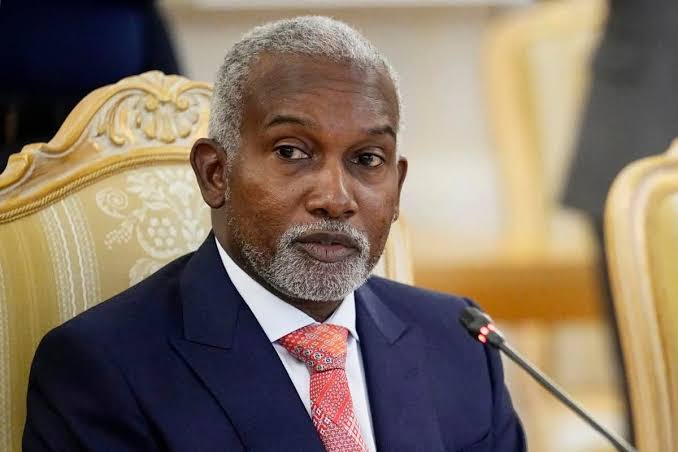
For a man burdened with one of Northern Nigeria’s most iconic political names, Yusuf Maitama Tuggar leaves office with remarkably little to show beyond polished speeches, diplomatic photo opportunities and a foreign policy record defined more by confusion than consequence.
History can be cruel to public officials who inherit symbolic expectations they cannot sustain. Tuggar carried not just a famous surname, but the legacy of Yusuf Maitama Sule — the legendary “Dan Masanin Kano,” a statesman whose intellect, moral authority and diplomatic brilliance earned him enduring national respect.
But while Maitama Sule became a national institution, Tuggar increasingly appeared like a modern Nigerian political archetype: internationally polished, intellectually decorated, media-friendly — yet persistently unable to translate promise into meaningful achievement.
His tenure as foreign affairs minister under Bola Ahmed Tinubu may ultimately be remembered as one of the most strategically incoherent periods in Nigeria’s regional diplomacy since the return to democracy.
The clearest evidence lies in the ECOWAS crisis that followed the July 2023 coup in Niger.
Nigeria, under Tinubu’s leadership and with Tuggar as chief diplomatic salesman, adopted a confrontational posture that included sanctions, ultimatums and open threats of military intervention. What was presented as democratic resolve quickly degenerated into diplomatic isolation.
Instead of restoring civilian rule in Niger, Nigeria helped trigger one of the biggest fractures in West African regional politics in decades. Mali, Burkina Faso and Niger hardened their anti-ECOWAS alliance, withdrew from the bloc and accelerated the emergence of the Alliance of Sahel States — a rival regional structure openly hostile to Nigeria’s influence.
For decades, Nigeria positioned itself as the stabilizing anchor of West Africa — a consensus-builder capable of balancing force with diplomacy. Under Tuggar, that prestige visibly eroded.
Abuja suddenly looked less like the region’s strategic leader and more like an overextended power issuing threats it lacked the leverage, domestic stability or regional goodwill to enforce.
The tragedy is that the warning signs were obvious.
Across the Sahel, anti-Western sentiment was rising rapidly. Russia’s influence was expanding. France was losing credibility. Military governments were exploiting nationalist anger against perceived foreign interference. Yet Nigeria’s response appeared trapped in rigid diplomatic orthodoxy, disconnected from changing regional realities.
Rather than adaptive diplomacy, Tuggar projected rhetorical aggression without strategic depth.
Even more embarrassing was the eventual outcome: ECOWAS failed to reverse the Niger coup, failed to preserve bloc unity and failed to prevent the geopolitical realignment of the Sahel.
Nigeria emerged weaker, not stronger.
Then came the extraordinary diplomatic vacuum created after Nigeria recalled ambassadors worldwide in 2023 without quickly replacing them. For months, key missions operated without substantive ambassadors, undermining bilateral engagement and exposing institutional dysfunction within the foreign ministry.
Serious countries do not conduct diplomacy on autopilot. Yet under Tuggar, Nigeria often appeared administratively absent from critical global conversations while the minister remained highly visible at conferences and international forums.
This became the defining contradiction of his tenure: optics without substance.
There was no shortage of speeches, summits or carefully staged diplomatic appearances. But where were the defining outcomes? Where were the landmark agreements capable of altering Nigeria’s economic fortunes or restoring regional authority?
Nigeria’s foreign policy increasingly resembled performance diplomacy — energetic in presentation but thin in strategic achievement.
Meanwhile, domestic realities continued to undermine whatever credibility Abuja hoped to project abroad. A nation battling inflation, insecurity, currency collapse and growing social frustration struggled to convince neighboring states that it represented a successful democratic model worth emulating.
Foreign policy cannot be divorced from domestic strength. Under Tuggar, Nigeria attempted continental leadership while visibly weakened at home.
That contradiction diminished the country’s soft power influence across Africa.
Perhaps the harshest verdict on Tuggar is that despite his elite education, diplomatic exposure and access to power, his tenure produced no defining legacy. No historic mediation. No transformative doctrine. No regional breakthrough. No enduring diplomatic accomplishment.
Only noise, turbulence and declining influence.
And so the painful comparison persists.
Maitama Sule left behind wisdom, stature and national memory. Yusuf Maitama Tuggar leaves behind the lingering image of a man who spent years orbiting power yet never quite rising above political mediocrity — a silhouette of inherited greatness, but never its embodiment.
Farouq Bin Momoud is a UAE-based erstwhile diplomat and foreign policy consultant.