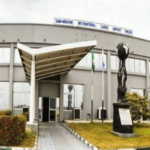
The Nigerian Communications Commission (NCC) has directed telecommunications operators to compensate subscribers with airtime credits following poor network quality recorded in parts of the country.
The directive was announced by the commission’s Executive Vice-Chairman, Aminu Maida, during a media briefing in Lagos, where he disclosed that the move followed verified breaches of minimum service quality standards by telecom providers.
“It is not a refund from the regulator but a compliance obligation placed on service providers,” Maida said, emphasizing that operators must take full responsibility for service lapses.
According to him, the compensation applies to service failures recorded between November 2025 and January 2026 across multiple networks.
Affected subscribers are expected to receive airtime credits, along with notifications explaining the reason and value of the compensation.
Maida added that the NCC will carry out independent verification to ensure compliance, warning that operators who fail to compensate eligible users could face sanctions.
He further revealed that the commission has strengthened its monitoring system by shifting from state-level performance tracking to a more localized framework at the local government level.
“This granular approach allows us to pinpoint exact areas and periods of poor service and move beyond general complaints,” he said.
The compensation directive, he noted, is part of broader reforms aimed at improving accountability and restoring consumer confidence in the telecommunications sector.
Meanwhile, Maida disclosed that telecom operators are planning to upgrade about 12,000 base stations in 2026 to tackle persistent network challenges.
He explained that only about 300 upgrades were completed in 2025, contributing to congestion amid rising data demand, but noted that progress has accelerated this year, with approximately 2,800 upgrades already carried out.
The planned upgrades will include expanding existing capacity, deploying new infrastructure, and transitioning from legacy 2G and 3G networks to more advanced 4G and 5G technologies.
Describing spectrum as the “highways” of telecommunications, Maida said improved allocation has helped boost data speeds in some areas, though increased usage often offsets these gains.
“When service improves, usage increases. This often leads to congestion returning faster than expected if capacity is not continuously expanded,” he said.
He added that sustained investment in fibre infrastructure remains essential for delivering reliable and affordable internet services nationwide, reaffirming the commission’s commitment to enforcing standards and protecting consumers.